REFLECTIONS

Reflections….

We have been on this journey now for 6 months and have covered over 3,200 nautical miles. We have encountered, experienced, and overcome so much and still I feel like such a novice. I am part of a Facebook group that focuses on the Liveaboard lifestyle and one would think that all 40,000 are out there sailing around from the way they talk. I felt quite intimidated by the group when I first joined and over the years I friended a few of those individuals. While in La Cruz, I had the opportunity to meet one of those people. He had served as a source of information and encouragement over the years. It was a little mind bending to meet him and his wife in person. A few conversations over the years on Facebook and then 3,200 miles later and in a market in a different country to stumble across this cyber acquaintance. I asked him how many from the group he has met, how many take the leap and cut the lines. In 5 years he said he had only met a handful. It is hard to wrap your head around the fact that out of the millions of boat owners worldwide, there are only about 10,000 out sailing away from their home waters at any given time. That is a pretty elite group that I have made the ranks in. It is a little mind boggling. As I contemplate our accomplishments and plan the next leg of our journey, here are some of my random thoughts and reflections of this journey so far.
We are abundantly blessed. There are not a lot of people who get to do something like this. We are remaining healthy. Actually, I think we are far healthier than we ever were in the states. We both have lost a lot of weight. We eat better, sleep more, and drink lots more water. We are seeing some beautiful sites and meeting some wonderful people. We are doing things that most only dream about. I am surprised at how long it has taken to rewire the brainwashing of the American Dream. I felt guilty for the longest time because it felt like I should be working. Why should I feel guilty for doing something for me? Oh, that’s right, I am not feeding into the corporate machine.
I miss the girls more than I ever imagined. There are several of my girlfriends who will be surprised by that statement. I had taken a page from my own mother’s parenting 101 manual and sought to raise the girls so that they would be strong and independent. I celebrated each milestone and accomplishment. Some of my girlfriends cried with each milestone because it meant that their kids were growing up and eventually wouldn’t need them. My friend and co-worker Mary cried every single day of each of her children’s senior years. I would go over to her office and tease her about her puffy eyes and tell her she needed to celebrate these moments not lament them. I get it now. I am sure she is looking down on me and getting quite a chuckle out of this revelation. Our kids are doing amazing things, each in their own right and we are removed from that now and I miss those moments, those calls and visits and holidays. Life is so complicated, and we are so spread out and I miss the family time. I marvel and am even a bit jealous of my friends Ev and Sue who are sisters who were born and raised in their home town and went on to marry and work in that same town and raise their families within blocks of each other. I miss that relationship with my brothers and their families and never really knew my cousins when I was growing up and right now I can’t get much further away from family. That would be my one regret of this lifestyle.
Sailing is hard. Bluewater sailing is even harder. It is physically, mentally, and emotionally demanding. Even when the wind and waves are perfect (which is rare) it is demanding. I recognize now that most people sail with a wind vane or an autopilot, but we hand steer every mile. I hope that we will be able to upgrade eventually.
My perception of the world has changed dramatically. My thoughts here are very hard to put into words. In some respects, the world has gotten so much bigger. Most of my life experiences were based in Montana and North Dakota and so I only worried about issues that affected those few hundred square miles of the world. Now that I have lived in and interacted with people across thousands of miles, my world feels much bigger. Issues that once were just news topics now have much more meaning. Things like immigration, human trafficking, drug cartels and cartel violence, over fishing, plastic pollution, fresh clean drinking water, waste management and the list goes on and on. Conversely, my world feels so much smaller. We spend less and less time connected to social media. We have not seen the news in months. Essentially now our world feels like it extends only from horizon to horizon. I don’t necessarily think that is a bad thing. In my travels, the world seems less violent and hateful than what is depicted on the news. We have encountered lots of good people who are kind and helpful. It seems that we all want a lot of the same thing, to raise our children well and to leave a little something of ourselves behind to be remembered.
I wish I had learned more Spanish. In Europe, when I was there I knew greetings, please and thank you and that was usually enough to initiate conversation and they would return in English because most people that I encountered had endured several years of English. Here, only the privileged obtain advanced educations and in the poorer regions if the child is not showing academic aptitude or is needed to work at home they only receive a 3rd grade education. In the larger cities that cater to the Gringos there is a fair amount of English spoken but in the smaller villages, there is little or no English spoken. I am not gifted with languages but have mastered greetings, my numbers, please and thank you and am beginning to be able to order at a restaurant and look for certain items in the store. Still it is woefully inadequate. These are an expressive people and they like to talk about their families and hear stories about you and your family and I can not accomplish that yet.
I wish I had learned more about weather, climate and meteorology. The times that we have experienced the worst weather happened after the most research and cross referencing with multiple sources to choose our weather window. I need to be able to add my current observations to the mix to make better choices when choosing windows. I am tired of relying entirely on outside sources and ending up with nothing like what we expected. The greatest frustration with sailing Mexico is the wind and specifically the lack of wind. That is not in any of the guidebooks or blogs that I read in preparation for this journey. We are motoring about 60+% of the time which I wasn’t prepared for however, all the cruisers down here say that they motor to where they want to go and then do short day sails in the region. We own a sailboat, not a motor boat and we want to sail more.
I am saddened by the abundance of garbage in the ocean and the lack of fish. I had expected the garbage but am shocked by the lack of fish. We have watched fishermen put out nets that stretch 1-2 miles and pull them in completely empty. We thought we would be eating fish several times a week but that has not happened yet. So far it has maybe been 2-3x per month. Please request seafood only for special occasions and then only order sustainable items from the menu. Take the time to educate yourselves about sustainable seafood options.
Cruising is much more fun with friends. Some of our best memories were those shared with others. It is forcing me to step out of my comfort zone and meet new people. I am finding that my curiosity about other cruisers and their stories out weighs my desire to be alone.

There is something dramatically wrong with American food sources. I am not a fan of conspiracy theories but here are my observations regarding my eating habits since leaving the states. In the states when I would eat a big meal I would find myself ravenous again in 2-3 hours. Here when I eat a large meal I find that 5-6 hours later I still feel full. I rarely suffer cravings. I had read somewhere that chemicals that stimulate the appetite are placed in some American processed foods. I thought that was ridiculous at the time but now I am not so sure.
There are days that I am embarrassed to be an American. I never dreamed I would ever say that however, I have watched some Americans behave very badly and treat the native people very badly. We are guests in their country and it is a privilege to be here. It does not take much effort at all to show a little respect and mind your manners. Of all the different nationalities that we have encountered, Americans seem to present themselves with attitude and entitlement and it makes it difficult at times to interact with local people who have had bad experiences with ill-mannered Americans.
I was a little concerned about how I would feel after our first trip home. I was worried that I would be homesick and not want to go back. I am finding that the opposite is true. I miss our boat, I miss my home. I find myself overwhelmed by the busy ness of life stateside. It is loud. The grind of the traffic and the hum of electricity 24/7 was beginning to wear on me. The speed of life there is crazy. Everything is rush, rush. Hurry here, hurry there, so many things to be done. The saddest thing though that I have noticed is that no one seems present in the moment. Everyone either seems to be running from something or racing towards something but very few people are here right now. Very few people are present in the moment. People are racing through life with their eyes glued to a screen. When they get to the end, what are they going to remember, will there be anything worth remembering? I used to be there, racing around. It seemed so important at the time. I am glad to get back to my simple life. I was exhausted by the time we returned to Mexico and the boat. Take some time each day to slow down, breathe, and just feel the moment. Don’t race through your life trying to get to something better because there is nothing better or more important than this moment. When you get to the end of your life and you look back, I hope your thoughts are filled with lots of moments and not just a blur.

Welcome Visitors

Boat Rules
Some family and friends may consider visiting us at some point during our travels and adventures. We would love to have visitors from home but most of our family and friends have no concept about our lifestyle. Our lifestyle looks large and glamorous on film, but it really is a minimalist lifestyle and while it is working for us at the moment, it is definitely not for everyone. If we do have friends or family visit us from home, we want to make sure that they have a great experience. I thought it might be helpful to communicate some of the rules that we live by on a day to day basis. It will help people plan whether they really want to stay with us on the boat or perhaps stay in a nearby resort and visit us on the boat. We get it, this lifestyle is not for everyone and our feelings will not be hurt if you tell us that you want to visit our area of the world but not stay with us.
We live in a very small space. Many of you have walk in closets larger than the space we live in. Please think about that, I have seen some of your closets and I am not kidding. We have all we want and need on our boat however, our resources like water and electricity are limited. We live at anchor not in marinas which means we are surrounded by water and are in constant motion. Our trips to land require coordination and planning. Our boat rocks forwards and backwards and rolls side to side. Sometimes the motion is a little and sometimes it is a lot, but it is the one constant. At any rate, if you have not visited us since we moved onto the boat or you have never lived on a boat then consider the following before you make plans and buy tickets.
1) Pack light. We have no where to put a large hard sided suitcase. All our storage space is dedicated to necessary items that we need so while on the boat you will be living out of your luggage and it needs to take up as little space as possible and be soft sided. Think carry-on, think small and organized.
2) Our electrical system is a 12-volt system so if it plugs in to your car and runs in your car, it will work on the boat. If it does not – it will not. Please leave your blow dryers and curling irons at home. Bring only those electrical items that are absolutely necessary.
3) Our electrical capabilities are entirely dependent on our solar panels and the sun. If it has not been a good sunny day then you may not be able to charge your phone. Also, anything you need to charge needs to be done so during the day, not at night so you need to plan your phone usage accordingly. Also consider bringing a waterproof storage bag to keep any electronics safe.
4) Our space is largely open so you will have little privacy.
5) Our water is also a precious and limited resource. Each person is allowed about a gallon to a gallon and a half per day. That is the amount of water you can use for washing, drinking, and meals. For us to get more fresh water it is a costly and physically demanding process. Often, we must carry water in 5-gallon containers an extended distance and then transport them to the boat. We must pay for water and fresh water in some of the places we travel to is very limited. Please ask for our procedures for washing, brushing your teeth, or doing dishes. We can’t waste water. You will not be showering on the boat. You will most likely go for a swim and then rinse off in a little freshwater.
6) No drugs are allowed on our boat. We can be boarded at any time by government officials and if they find drugs or their dogs find drugs they can confiscate our boat. This will not be allowed to happen. If you take prescription medications, they need to be packaged in the bottle they were dispensed in and you need to bring the prescription for each medication that you take. This is not a joke and is not negotiable, our home is at stake.
7) The clothes that work in this environment are clothes that can be mixed and matched and layered. You will wear the same clothes day after day, it’s ok, everyone does and no one cares. Cotton breathes the best and manages moisture the best. Don’t bring fancy or flashy clothing. If the seas are rough going in or we have a bad dinghy landing chances are they will get wet, soiled or torn. Once on land we walk a lot. Your shoes should be comfortable and be able to manage water. We live in a watery world. You will get wet when you don’t expect to, it happens no matter how careful we are.
8) Our schedules are very dependent on tides, wind and weather so our plans need to be very flexible. If you plan a visit, please let us know specifically 1 or 2 activities that are very important to you and we will try to make those happen but please don’t expect a jam-packed schedule. Please bring a book and /or a game in case we have to spend an entire day on the boat or in case something unexpected happens and you need to entertain yourself for a bit.
9) Our day to day schedules tend to be very fluid as well. We sleep when we are tired and eat when hungry. Most of our visitors to date report feeling quite hungry but our diets have changed dramatically since moving aboard and we have noticed that we eat less and less frequently as well. I would encourage you to bring a favorite snack. Also, please speak up and let us know when you are hungry, our feelings won’t be hurt, and I can usually whip up something to feed a growling tummy.
10) You might want to consider bringing earplugs. Boats have lots of noises that will be new to you. For those who haven’t been on a boat, some of the sounds seem quite alarming or annoying. The boat tends to moan and groan a bit and there are pops and creaks. There are motors and pumps that run at random times day and night. Our living space is below the water line so we also hear nature up close and personal. We can hear the snapping of shrimp, singing of whales, lapping of waves and many other crazy sea life sounds.
11) Please notify us of any food allergies or allergies in general. It requires a great deal of time and effort to coordinate a trip to shore. If the meal I have prepared conflicts with you, I may not be able to quickly come up with an alternative. If you do have a reaction, we have basic first aid and interventions on the boat however, medical care will take an extended period of time to arrange.
12) The captain always has the final say. If he determines that conditions are not safe or that we need to go somewhere or not go somewhere because of conditions and safety, you will defer to that decision. Our priority is the safety of everyone on board and our next concern is that you take home some amazing memories.
Again, we would love to host friends and family from home but we want to make sure that your visit is filled with amazing memories not stress and misery. If you are considering a visit, please contact us and ask us questions. Give us plenty of time to plan and include us in you planning process so that you have a great experience.

Manzanillo

IMGP2989
Manzanillo is a picture postcard setting, an anchorage that is quite magical and unlike anything you will ever see anywhere in Mexico or Central America. You feel like you have stepped through a window and landed in the Mediterranean. The anchorage is situated in front of a resort called Las Hadas, located in Manzanillo Bay opposite the city and port. Las Hadas means “the fairies”. It was built by a tin magnate from Bolivia and opened for business in 1974. It was constructed in a Moorish style with whimsical architecture with an attempt to bring a bit of the Mediterranean to the Pacific Coast of Mexico. It initially catered to his family, friends and Hollywood A listers. The party began on opening night and continued essentially for 3 years. In 1977, the money ran out and had the property had to be sold. Attempts have been made to manage it as a condo type property, a resort, and a hotel. It has changed hands many times over the years, but it has never recaptured the original hype. Hollywood even tried to promote it when it filmed Bo Derek’s movie “10” on the premises. It is currently managed as a combination of private condos, and hotel/resort. We noted that the staff far outnumbered the guests and it continues to struggle to remain solvent. We even saw posters advertising fundraising events such as silent auctions and bake sales to raise money to complete repairs and maintenance projects. Even in its current state, it is stunning.


Manzanillo itself is a very old city that dates to the 1500’s when the Spanish were trying to establish trade routes to China. It is a natural deep-water bay and has been an important port for centuries and remains one of the busiest ports on the Pacific Coast. We watched freighters coming and going at all hours of the day and night. 20180201_131549It is not pretty and does seem dirty but was fun to explore. There are buildings and homes that are carved into and clinging to the cliffs that surround the bay. 20180201_141529The central market is extremely bright and vibrant. It is 2 stories with the upper level mostly eateries looking over the vendor stalls below. 20180201_134624The vendors sell all manor of fruits and vegetables, chicken, pork, beef and the fresh caught fish of the day. We bought fish, and 2 bags of produce for about four dollars. There is limited refrigeration and it seemed like only the fish vendors had a freezer. The chicken and red meat was all cut up and laid out on tables for people to pick through and choose their cuts. Everywhere we go, I see tables of meat laid out with no packaging, ice or refrigeration. We also notice there is no flies and no odor. I still can not bring myself to buy raw meat yet. I do love their rotisserie chicken though, so yummy.


Our first few days were spent exploring the resort and learning the bus services. The resort is painted all white and the streets are all cobblestone, but no cars are allowed to drive there. The only vehicles are golf carts. There are several pools and restaurants and they have their own beach. If you are not a guest there, you must pay $900 pesos per person to use their beach or pools which is about $50 per person. It seemed a bit ridiculous since the place was essentially empty with only a couple families on the beach and a few people in the main pool and no one in the adult only pool. We did wander and got some amazing pictures but no we did not use their pools. We made a couple trips into the next town to provision and shop at Walmart….uuugghh. Everyone who knows me, knows how painful it is for me to write that and admit to shopping there, but every bus driver knows the word Walmart and we know we can get some essential items there. Far more interesting was our trip into Manzanillo proper. It was nearly an hour bus ride that wound us through the Gringo shopping district, then back through a residential district behind the port and finally to Manzanillo. Our bus driver on the way back to the boat was nothing short of amazing. He looked like he was about 20 years old and he worked his bus like Mario Andretti. At one point he was pulling out onto a busy main street. He was making change, a lady in the isle lost her balance, he caught her and held her up, made change, continued to accelerate and shift and never missed a gear. It helped too that he was jamming to Creedence Clearwater. Like I said, it is a very old city and at first blush it seems dirty, but it is several hundred years old and a working port city. Dave enjoyed one of the best Frappuccino’s I think he has ever tasted while we were taking a break after a long walk and just before a big rain storm dumped on us. Not only was the Frappuccino delicious, it was a work of art.
I was able to do some paddle boarding and some snorkeling. I snorkeled near the shore because when I paddled out the fish got big…. really big and I didn’t know how friendly they were and decided not to find out since they looked about my size. I stayed close in and even got caught up in a school which was pretty exciting and felt National Geographic ish.IMGP2993


After leaving Manzanillo Bay, we went around the corner a mile to Santiago Bay where there was supposed to be good snorkeling. There was an old ship wreck from a previous hurricane that could be snorkeled. I paddled to it several times but the currents surrounding the wreck exceeded my swimming capability, so I could only look from above. I have been rolled now a couple times in the surf and did not want to chance getting rolled into the edges of a hulking metal skeleton of an ocean freighter. I did try to snorkel a coral reef just off the wreck. Sadly, it is all dead because of poor management and tourism. People are dumped off by the boatloads and they walk all over the reef, touching and breaking it. It sits at the mouth of an estuary and with the recent rains, the water was pouring out of the mountains and into the estuary and over the reef, so the clarity was not great either. We did experience our first earthquake while there. It definitely shivered our boat up the anchor chain all the way up the mast. We clearly weren’t thinking following the earthquake and decided to take our garbage in not realizing that the waves would be bigger. Sure enough a big wave grabbed us in our dinghy, flipped us over, washing machined us, dumped us and everything we had in the dinghy out and spitting it out all over the beach and then kindly filled the dinghy and my purse with sand. We looked like a couple drowned rats. We calmly collected everything we could. Deposited our garbage, got back in the dinghy and went back to the boat to dress our wounds and dry out. Dave had clearly wrestled with the motor and had some cuts and bruises and while not bleeding, I had my fair share of bruises as well as I had ended up under the dinghy. If someone had a video of it, I am sure they are $10,000 richer now. Heather our daughter tells of a story where she took a tumble on a ski hill and when it was said and done with it looked like a yard sale happening across the face of the hill. I think we had our own version of a yard sale on the beach.
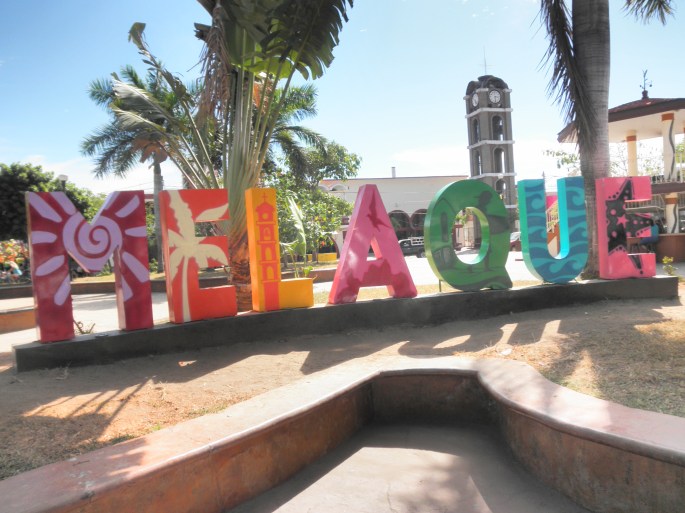
Our next stop on our way back north was Melaque. OLYMPUS DIGITAL CAMERAWe enjoyed that stop for sure and stayed for several days even though the anchorage was not well protected and was quite rolly. There were good food, interesting shopping and very friendly people. Melaque has a very large Canadian population so much more English-speaking people and typical “gringo” food items.OLYMPUS DIGITAL CAMERA Even Uber has made it this far south in the form of Ubercitos which are motorized 3 wheeled vehicles with canvas enclosures about the size of a golf cart. We noticed that the school had significant fencing around it and wondered why. The answer we arrived at was not what we expected. Education here seems to be a privilege and honor, even at the elementary age level. Not everyone gets to go to school and possibly, from what we observed, within family units maybe only one of the children gets to go to school. Entire family units walked to school with the student and then instead of leaving, they remained near the school grounds throughout the school day. Different family members came and went as other family demands dictated but the child on the school grounds was definitely well supported throughout their day. So the fence was there to minimize the distractions from the rest of the family. It is very hard for me to wrap my brain around the fact that not all children in our world have access to basic education. Our trip south was definitely memorable but we didn’t want to venture too far south. We are planning our first trip home, flying out of Puerta Vallarta and didn’t want to get stuck somewhere and not be able to get back in time. North beats are definitely challenging and not so much fun.
A Little Piece of Paradise


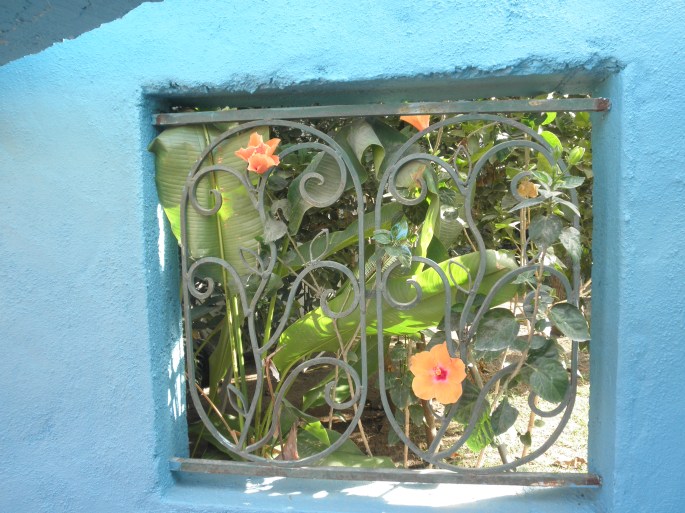
Tentacatita is a beautiful bay tucked away that offers protection from just about every direction. It is far enough off the beaten path that our Garmin had no data for it. There were no depths listed and the rocks in the entrance were not marked, however it is a favorite cruiser destination. I was very glad we had guidebooks and it was daylight when we arrived because there were rocks right in the middle of the entrance. Central Rock was not on our Garmin and the reef reaching out to it was awash, so we might have chosen a different route into the anchorage which could’ve ended badly. As it was, Tabula Rasa arrived before us and helped guide us in. It is a popular anchorage and there were about 15 other boats there. Several we have seen before in other anchorages. We anchored right in front of the estuary entrance. A long golden sand beach on the right that stretched out for nearly a mile and ended in front of 2 waterfront resorts and rocks and reefs curled around to the left. It was beautiful, cactus mingled with palms and water the color of a neighborhood swimming pool. We made plans to explore the estuary first thing the next morning. The estuary stretches 2 miles inland and ends in a small fishing village that is a short walk from another small cove and beach. As I was lounging in the cockpit, I noticed some dolphins perusing the anchorage. They were going around and checking out the different boats and their anchor chains. We had read about Chippy and his family who are quite social and seem to enjoy the company of cruisers. They have learned to use anchor chains as scratching posts and they enjoy ropes as well and have even learned to untie knots. Apparently if you use rope rode instead of chain, they will sometimes untie the rope from the anchor and watch you float away. I was not disappointed. The dolphins came and played in our chain and I got some wonderful pictures. They rub and twist around in the chain and if one of them seems to be taking too much time or not sharing then the others will hook the chain and swim off with it. It is funny to watch as normally our chain drops straight down from the bow of the boat but when the dolphins were around you could watch your chain go zipping off to the right or left or under the boat. We checked our anchor set daily because of those goofy dolphins.


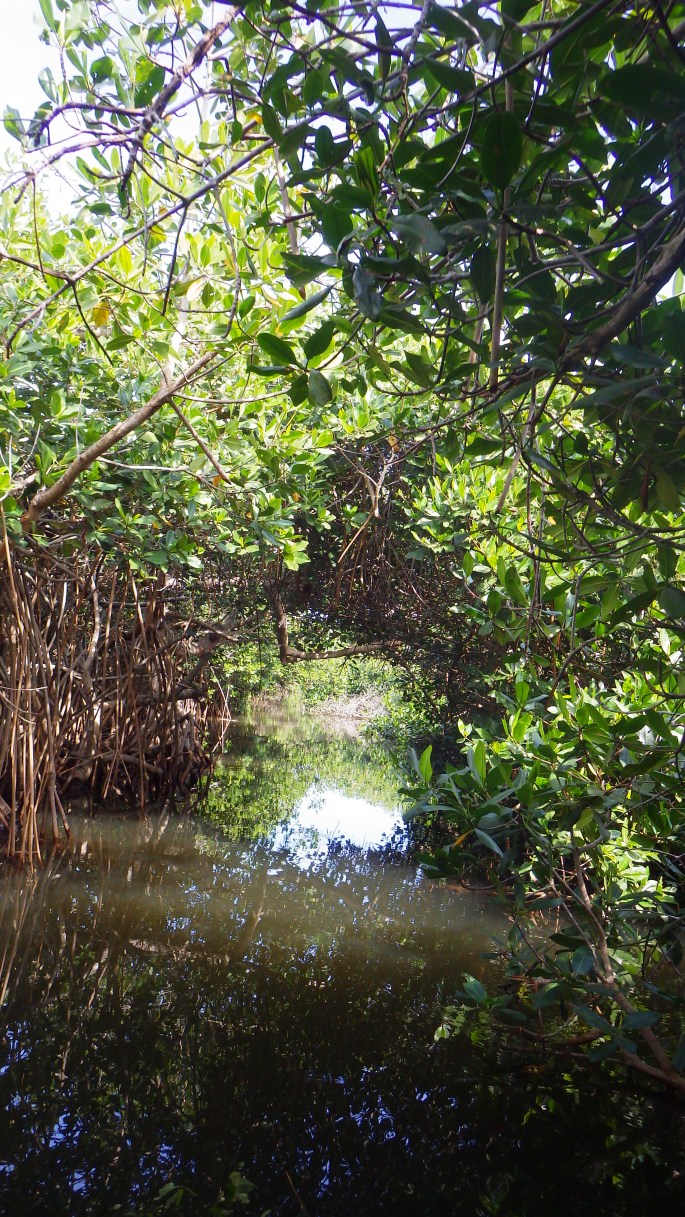
The next day we all piled into a dinghy. We made the short trip to shore and crossed the bar easily and only had to walk the dinghy a short distance. The water was clear, and you could see the channel as it transitioned from the bay to the estuary. Initially, the water was a beautiful blue green that slowly transitioned to a dark chocolate brown as we wound through the mangroves.IMGP2814 The further we went into the estuary, the narrower the channel became. As the channel narrowed, the trees began to close over us creating these living tunnels. It was enchanting and reminded me of the Little Mermaid when they were singing “Kiss the Boy”. IMGP2878I took literally hundreds of pictures and sadly very few of the pictures capture the essence of this amazing place.IMGP2878 In some places it was so narrow that we had to push back the plants and pull the dinghy through with our hands or lay down because the plants overhead hung so low that there were only a few feet of space between the water and the canopy. IMGP2874We found the fishing village and crossed over to the beach. The water was the most startling blue. They call that place “The Aquarium”. There were only a few buildings there. We had read that the village had suffered heavy damages in a hurricane some years ago and had not recovered. We were busily snapping pictures of the beach and the water. Dave who takes pictures of everything even snapped a couple pictures of some of the dilapidated buildings and within moments a police officer appeared from inside one of the buildings and indicated that he was not allowed to take pictures of that building. We turned away and moved up to a small open-air café and no sooner had we taken our seats than a pickup with 4 more police officers pulled up and parked and remained there while we ate and did not leave until we left. I am not sure what that building represented or who was there but to have 5 police officers in a village of probably less than 30 people, clearly it was very sensitive. We put our phones and cameras away, finished our meal and returned to the dinghy. We came through the estuary on high tide and dallied along the beach clearly not thinking about the return trip. We ended up returning on low tide which turned out to be a bit of a challenge. At one point, we got into a tight spot…so tight that we were using everyone’s shoes to put over the sharp edges of branches in hopes of avoiding a puncture hole in the dinghy while we pulled her through by hand. There is no walking out of a mangrove estuary. Toto, we are not in Kansas anymore and we really need to think through some of our decisions all the way to the very end. As it turned out we made it safe and the dinghy is still floating so crisis averted.
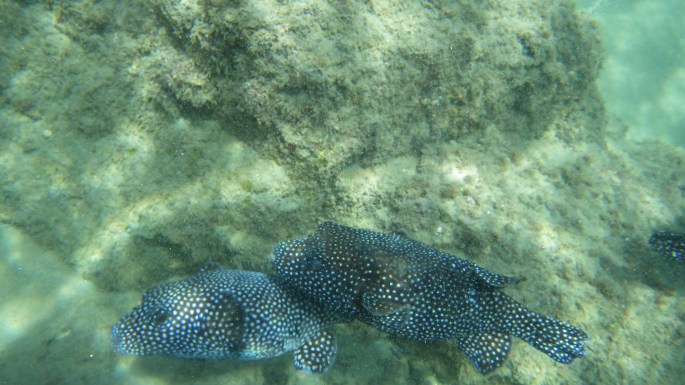
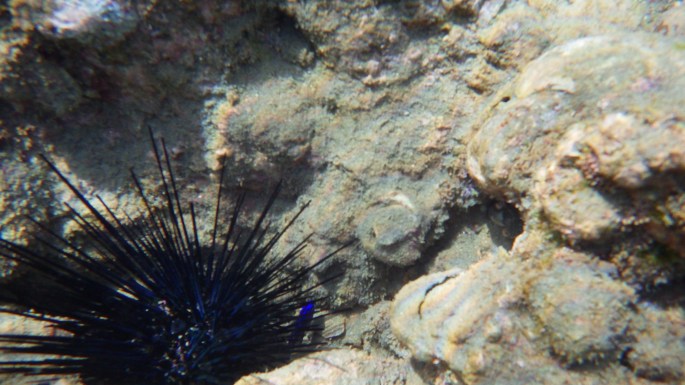
Tentacatita offers some beautiful paddle boarding and snorkeling. IMGP2906Lots of the cruisers have paddleboards and in the mornings and evenings the water was fairly flat and crystal clear. You can easily see 12-15’ down. It is absolutely stunning. I am so glad that I got a SUP. Some days I went out 2-3 times and paddled several miles. I can snorkel from my board and get on and off it successfully albeit not so gracefully yet. There were lots of sea urchins in the tidal pools, but I only managed to get stabbed a couple times. Snorkeling is mind blowing for me and now whenever we go into an anchorage, I am looking for the best places that might offer snorkeling opportunities. IMGP2897I had never been much for being in the water and had never really liked to put my face in the water. I have always loved the sound of water but had always been uncomfortable in the water. That sounds funny coming from someone who now lives in a boat on the water. I think I have always loved the water, but I guess feared it and so kept my distance and admired it from outside of it’s confines. Our daughter Jayde who is an excellent swimmer wrote an essay when she was a senior in high school that describes how she feels when she is in the water. I totally get it now and most days I can’t wait to get in the water. Tentacatita was quite a magical place. There were no services, minimal cell coverage, just a lot of peace, quiet and natural beauty.IMGP2888
Leaving Cabo – Take 2

Cabo is a great place to visit and it had been a safe haven for us when we needed it however, there is only so much of Cabo a person can take, and we had well exceeded the recommended daily allowance. One of the reasons why we set sail in the first place was to get away, to experience new cultures, see new places, live more simply, and enjoy the beauty and peace that mother nature has to offer. These features are in short supply in Cabo which I now refer to as “Party Central”. The throbbing music 12-15 hours per day with every venue thumping to a different beat and a different sound was wearing as thin as the airplanes in San Diego. The panga drivers were becoming less tolerant of us and our position near the entrance of the marina. Initially they had been careful with their wake around us but towards the end it felt like they were sending us a clear message that we either needed to leave or at least move away from the entrance and further down the beach. Some were coming by so close that we could’ve reached out and touched them as they buzzed by. When they came that close it would throw up a big wake causing our boat to rock badly from side to side. Their day usually started around 0900 and ended at dusk. The music on the beach usually started around noon or so and ended well after midnight. The days were long and loud. In the city, the first two blocks up from the marina were all geared towards tourists. There were hawkers on every corner and street vendors pushing their souvenirs approaching the gringos every few feet coming from every angle. If you didn’t like what they were showing you then many offered drugs and if that didn’t get your attention then there were the children pushing trinkets. When we wandered past the first couple blocks, the next blocks seemed to be filled with poverty. I have some great memories of Cabo, but it really wasn’t what I was looking for. I needed something a little more village like and a little less Vegas.
Our original plan had been to go to La Paz and spend our first season in Mexico using La Paz as our base to explore the Sea of Cortez and then explore the mainland next year. The memories of our first attempt to make La Paz were still fresh in our mind and now understanding how the air and water move out of the Sea of Cortez during the winter months, we were not anxious to try that again especially not knowing if our engine was going to take a heavy load. We decided to head across to the mainland for La Cruz, located in the large Banderas Bay. That would give us a little downwind sail, the currents would be in our favor and if the engine could not carry the load, we could anchor under sail in La Cruz. The only drawback was it was a much longer trip. This would be over 300 miles. We checked the weather models daily. The winds looked light and variable with even the possibility of nothing…. uuuggghhh. Our entire experience in Mexico has been too much wind or not enough. We opted to go with not enough. The trip was uneventful, so uneventful that we motored 40 hours of it. Most of the time there was not even the slightest breath of wind. There were no dolphins, no whales and seemingly no fish. Dave trailed a hand line the entire trip and not even a nibble. We did see our first sea turtle which was truly exciting. Such gentle creatures plodding along out in that huge expanse of water. The chances of two solitary travelers crossing paths out in the Pacific Ocean seemed pretty small. When it happened, we slowed down, turned around and communed a bit with the turtle.20180104_102854_HDR He even paused for a photo op for us before we went our separate ways. The other event that broke the monotony happened when we picked up a couple hitchhikers in the form of sea birds. They dogged us for hours. It was hot and this one bird kept circling our boat completing touch and goes before it finally landed up on the bowsprit. Dave didn’t notice at first but when 2 more settled in he took notice. I pleaded with him to let them stay. They were on the bowsprit, not on the sails or the mast. They weren’t in the way or hurting anything, they weren’t noisy. They weren’t even afraid, you could go right up to them and almost touch them and they would just look at you. They just hung out and groomed for hours. There wasn’t anything special about them, they were medium sized grey birds that seemed grateful for a rest. I assumed they must have been juveniles because periodically a larger bird with more formal plumage would fly by and there would appear to be a little conversation between those resting and the adult. When the sun went down the 3 on the bowsprit tucked their beaks under their wing and they slept all night until dawn. After the sun came up they woke up and resumed their grooming. The adult made increasingly frequent flybys and the conversation between the ones on the boat and those in the air seemed to take on a more urgent tone. I then realized we had teenagers aboard because the harder the adults worked at getting them to leave the boat the more sass and attitude those on the boat gave the adults. I recognized this interaction only too well. Finally, Dave decided it was time to give the adults the upper hand and he went forward and encouraged the teenagers off the boat much to the relief of the adults. The teenage birds though had taken a liking to the free ride and spent the next 4 hours following our boat and trying to land. In the end Dave and I had to take turns up on the bow of the boat to shoo them off. I had enjoyed their company during my shifts however, Dave did not enjoy scrubbing all the bird poo off the front of the boat. I am no longer allowed to invite hitchhikers along for the sail if they are seabirds. Small land based birds blown off course are tolerated if I clean up any mess they leave behind. Speaking of hitchhikers, just about the time we finally got rid of our feathered hitchhikers, the islands that lay off Banderas Bay came in to view. The Tres Marias islands are a prison colony and travelers are advised to give the islands at least 20 miles distance and not to pick up anyone from the water, yikes, that is harsh.
Banderas Bay is quite large. It is 16 miles wide and 26 miles deep. It is hemmed in on three sides by mountains. It appeared lush and green which was so welcome after the weeks of skirting along the desert. People rave about the desert, so far, I am not a fan. I spent many years of my youth growing up in drought conditions in the Little Missouri Badlands, hot and dry is not my favorite climate. I was very happy to see trees and lots of green. There were even coconut palms and banana trees and Dave and I enjoyed our very first coconut. This area is known for a specific kind of tree that grows there called the Huanancaxtle pronounced wah-nah-KAHSHT-lay.20180107_142927 They are huge beautiful trees that provide shade and shelter to those on the ground as well as the iguanas and birds who live in their canopies. As we came into the bay, we headed towards the northeast corner. We were looking for the anchorage near La Cruz. There was no missing this anchorage. There must have been 40 boats anchored out. Our friends on the Tabula Rasa had arrived the day before and had space next to them for us. We found our friends and set the anchor. It was so nice to be back among friends and in a community of cruisers. It was nice to be away from the thumping music and hoards of panga drivers. Gene and Kathy took us into La Cruz to show us around. La Cruz is what I had been waiting for.20180106_172525 Cobblestone streets with not a vendor in sight. Dogs ran free, chickens scooted here and there, little one room shops mingled with homes most of which were one room as well. Many of the buildings have cinderblock walls but the roofs are grass or palm fronds. Glimpses into homes reveal most are a single room filled mostly with beds. Most had a small kitchen area with a sink and countertop along one wall and then stacked in a corner was a table and plastic lawn chairs and then the rest of the space was filled with beds. In the evenings, the chairs and table come out into the street as does the stove which is usually a metal drum cut in half lengthwise with a grill over it. An evening stroll is a feast for the olfactory senses as each family cooks the evening meal and serves it there on the street. It smells wonderful. After dinner the whole family which is usually 3 or more generations go for a walk and everyone visits with each other and all the rest of the families in the neighborhood. It is such a social, peaceful end to the day. I find it ironic and quite sad that so many people from other countries sacrifice everything to chase the American Dream while Americans spend their whole lives floundering through the emptiness of that dream searching for the sense of peace and belonging that these people leave behind.20180117_183430
La Cruz was great, it was everything I had been looking for but it was about to get better. Gene and Kathy had a little surprise for us. They have friends who own a villa on the south side of the bay and we were invited to join them for lunch and to spend the day. I could not have imagined how this day would unfold. It started with a bus ride to Puerta Vallarta which was an adventure in itself. The buses are decorated by each driver and there is fuzzy dice hanging in every bus that we rode on and faux fur, and Madonnas and medallions and an array of other decorations. I am not sure how some of the buses are still in service. One of the buses that we rode on you could see the road through the floor and every time the driver went around a corner, the doors flew open. Most no longer have bumpers and the one that did had a huge tree limb stuck in it. There is no real bus schedule that we can find. The gist of their routes is written in marker on the window, most are legible, many are smeared. Most of the drivers understand some English and will nod their head yes or no if you give them a destination. The main stops have a person who seems to understand the chaos and kind of herds people onto the bus they need and they seem to speak several languages and usually have a great sense of humor. Over on the Baja most locals have a bit of English but over on the mainland English is much less spoken or understood. We knew that we had 1-2 bus changes to make but once we got off the first bus we had no way to figure out what bus to get on to make the next leg so in the end we took a taxi to our destination. Our taxi driver had a little English and was kind enough to explain how to take the buses back to La Cruz. The drive wound us through Old Town, the Romantic District and then out of town to the south side of the Bay where he dropped us off. As we walked down the driveway to the entrance my sense of wonder turned into a sense of awe. This was a villa in the truest sense, the likes of which I had only seen on TV. It was absolutely stunning with a view overlooking the bay that was jaw dropping. The entire front of the villa was glass and most of it could be opened completely to allow the sun and sea breezes in. Parts of the house were built around trees so as you walked down a hallway, there would be a tree and plants and no roof just sunshine and a gentle breeze. The main living area opened onto the deck that was complete with an infinity pool, a hot tub, a bar, and lounge chairs everywhere.20180108_120703_HDR To top it all off there was a chef, a bartender and staff to meet your every need. Kathy’s friend Julie and her husband Karl greeted us warmly and made us feel welcome right away. We were then introduced to Julie’s parents who own the villa. In this world where there is so much division, these people opened their home to us, perfect strangers, and treated us like family. My favorite part of the day was lunch. We were all seated around this huge table whose center was a lazy susan. The staff set the table and the food was placed in the center on the lazy susan. The drinks were made to order for each person and the meal was the catch of the day. There were two types of ceviche as well as fish tacos, chips and guacamole and dessert was fresh coconut. Jerry the patriarch of the family and owner carefully spun the center and paid close attention to what each person liked and as the meal progressed he would make sure the lazy susan stopped in front of you with the items that you most liked. If you were distracted or visiting, he would hold the table and move it back and forth in front of you until you noticed before he would rotate the table to the next person with the things they liked. He continued this until he was certain that each person at the table had their fill of what they most liked. It may sound like a trivial side bar to the reader but in my mind, it was a remarkable action. Here was a man who is abundantly blessed who had not only opened his home to strangers but took keen interest in each of our preferences. He interacted with and took interest in each person present and he did it in such a way that we felt like part of the family. It was such a magical day. I have nothing to offer in return other than a grateful heart, so Julie and family thank you for such a beautiful day and these wonderful memories that I will always treasure. At one point I was moved to tears because there was just nothing in my experience that I could relate to and things like this don’t usually happen to me. It was overwhelming.FB_IMG_1515995662854
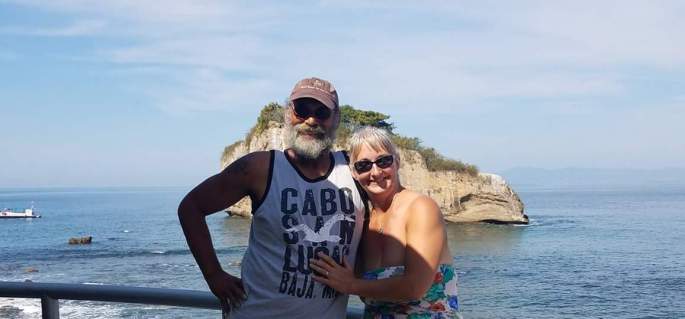
Our next big adventure a few days later was to go with Gene and Kathy in their dinghy six miles across the bay to Paradise Village. I am not sure which is more challenging, Mexican buses or dinghy rides across open water. Needless to say, both should come with warning labels and ladies should be encouraged to wear sports bras as the extra support is a definite plus. It is hard to believe that in just six miles you can go from a small village to a world of resorts and gringos. The marina there at Paradise Village offers cruisers access to their resort amenities and pools and so we were checking into their services, prices and amenities. They are also considered a hurricane hole. During our explorations and wanderings, I had managed to set my phone down. I didn’t realize it until we got back to the boat. My heart sunk. I had not set up the lock system on it so it was an open phone. Dave and I immediately dinghied from our boat into La Cruz and caught a bus and then a taxi back to Paradise Village. The chances of me getting my phone back were slim to none but I had to try since it is my link to the girls, family and friends. It took us nearly 2 hours to get back and start retracing my steps. It had not been turned into lost and found. Some of the places were already closed. It was just looking more and more bleak. I was sick to my stomach because it would be several months before I could afford a new phone. We stopped at the last shop, the one where no one spoke English and the shop keeper scooted around behind the counter and dug around under some items and presented me with my phone. I was so overwhelmed. My phone was worth more than he makes in probably a week and it was unlocked and yet he had tucked it away and kept it safe. I continue to marvel at the world we live in. It is full of kind and generous people. At every place we have stopped we have experienced some form of kindness or generosity. While I understand that technology has connected us all, I also feel like it is tearing us apart and spreading hate. I do not miss the media, and I am on my phone much less. I have issued this challenge before and I will continue to do so because I believe it is so important. Shut the TV off, put your phone away and have a real conversation with the people around you, complete with eye contact. Real conversation with real people is a powerful thing, don’t lose this skill.20180107_145400_HDR

Houston We Have a Problem

Houston, we have a problem

We spent as much time as we could in Cabo, but it was time to move on so that we could get to La Paz in time for Christmas and our first visitor. Sierra, one of our daughters, was coming to spend the holidays with us. I was so excited as I had greatly underestimated how much I would miss family when we sailed away and embarked on this odyssey. La Paz was 150 miles away so just over 24 hours of sailing to get there. We checked and rechecked the weather and wind. It looked like we were actually going to get to sail. We were finally going to have wind right at 20 knots which is perfect for us. It was out of the North so we would be doing some tacking which meant more than 150 miles but at least we would be able to sail and not have to motor the entire way. We need a little more wind because we are so heavy. Fifteen to twenty knots of wind move us well and once the sails are trimmed then the ride is pretty comfortable.
The day dawned bright and clear, but no wind there in the bay. We cruised in to the fuel dock and filled up our fuel tanks, dumped garbage and took off. The winds were light at first but built quickly across the morning and into the afternoon. We hit 20 knots and they continued to build. We went ahead and put a reef in the mainsail as it is so hard to reef in high winds or darkness and it looked like the winds were going to keep building. In addition to the north wind which was coming at us from the direction we needed to go in, the Sea of Cortez was also flowing out, so we were fighting wind and current, so much for being excited to see wind in the forecast. What we thought was going to be a good sail was turning into a beat. Sailboats are unable to sail directly into the wind, so we were tacking and making very slow progress. The waves were not big but they were piled on top of each other, so we were constantly getting slammed by waves. As the wind and current continued to build, we were unable to make decent forward progress and were forced to turn on the engine. Even with engine and sails we were only making 3 miles an hour of forward northerly progress and we still had over 100 miles to go. This was shaping up to be a grueling passage as this wind pattern was predicted to last for 3 days. We continued through my shift and at 1800 I turned the helm over to Dave. I was exhausted from battling the wind and waves and trying to keep the boat moving north. We don’t have autopilot or a wind vane, so we hand steer every mile. In heavy weather it requires constant upper body and core effort to hold the wheel and maintain a direction. I had tried going closer to shore and then out away from shore to see if the conditions were different in shallow or deep water but there was no relief. I headed down and crawled into bed only to find water pouring into our bed and the lockers. The heat and dryness of the desert had caused the teak to dehydrate and shrink leading to leaks everywhere. The bedding was soaked and I no longer had any dry clothes. The seas were confused making the ride very lumpy. The winds were sustained at 24 knots and still building. The ride was getting more and more uncomfortable as we were getting slammed by waves every couple seconds. I had no sooner found a semi dry spot to curl up in to try to get some rest when the engine started to sound rough and Dave reported that we seemed to be losing power. We were only making 1-2 miles of forward progress with engine and the mainsail. We had pulled the headsail earlier because the winds were continuing to build and with only one reef in the mainsail, we had a lot of sail area out there.
By 1830 things had continued to deteriorate and Dave hollered that he needed me at the helm. I no sooner got to the helm then the engine died. I took the helm but with just the reefed main and no engine, I had no steerage and was going backwards fast. Dave was down in the lazarette working with the fuel filters. I had to put out more sail, I had to deploy the genny. I have a love hate relationship with our headsail, the genny. Mostly I hate her because she is so temperamental and when she notices me at the helm she does everything in her power to make my life miserable. A typical experience with the genny up and me at the helm usually results in me yelling obscenities at her such that would shock my children. Our genny does fine if she is getting the glory and you are paying attention to her. If a big swell rolls through that she doesn’t like then she flops around, if the wind shifts… oh here let me flop and throw myself and make a nuisance of myself or the best is when I get distracted by something cool in the water like whales or dolphins and she notices that I am no longer paying attention to her, she will flop around and look for things up on the front of the boat to wrap her lines around so someone has to go forward and untangle them. Once untangled, she will billow out with a smug little snap and function perfectly until the next time. The mainsail just plods along making adjustments but not the genny she voices her displeasure at any lapse and demands your constant attention so the genny and I do not get along. I yelled down to Dave that I was putting out the genny because we had no steerage and by this time the winds were sustained at 29 knots. The genny is a light wind sail but she is on a roller furling and can be easily reefed. Dave looked up and me and blinked his eyes a couple times because he knows my relationship with this sail. I had to get some ability to steer as we were being driven by the wind and waves. We had been on a starboard tack before the engine died so we were headed away from land and out to sea. Our boat tends to weather helm and she had very quickly done so without the engine power to overcome the weather which meant we were healed to 40 degrees, our decks were underwater, and I was standing on the cockpit combing to try and remain upright. I eased about a quarter of the genny out. Since we didn’t know at that time what happened to the engine, I wanted to bring her to a port tack and head towards land. It took several tries to bring her around because I couldn’t get enough speed built up to take us through a tack. She would stall in irons and I would have to move everything back over starboard and try again but finally I was able to get her on a port tack and head towards land but unfortunately backwards too. The wind and current on a port tack was driving us south, away from La Paz, away from Christmas with my daughter. Dave worked on the engine for 2 hours, by now I had been at the helm for 6 hours. We had water in the fuel, lots of water. He took the helm for an hour to give me a break and then I took it back, so he could sleep and work more on the engine. The conditions continued to deteriorate. We could no longer tack to turn we had to jibe. I had heard and read horror stories of accidental jibes, so it never really occurred to me that you might want to deliberately complete this maneuver. I had never completed a jibe and certainly not in these conditions. I was terrified but it worked well. On the starboard tack we could make 1 mile an hour of north progress, on the port tack we could mostly hold our position but were unable to move north. News on the engine front did not bode well. Dave changed all of the fuel filters including the one on the engine and we had water encroachment all the way to the engine. Dave had bad news, he felt like the lift pump had failed. We were not going to have an engine any time soon. We focused on sailing the boat for the next 12 hours and made 3 miles of progress north. We were both exhausted, we each had only 3 hours of sleep since the engine went down. We finally made the decision to turn around. We had only one place to go, we had to go back to Cabo as it was the only place we could anchor under sail, another new experience. We turned around and continued to battle winds and current. It was just a different battle. Now instead of getting hit from the front or the side, we were getting slammed by waves hitting us just off center of the stern of the boat. When that happens, the wave pushes you sideways and then the sails take a direct hit from the wind. If you take big winds direct then it pushes you over and it takes a lot of muscle on the wheel to bring the boat back around. This went on for hours. We knew we needed some wind to make it back to Cabo and we needed some wind to set our anchor, but we had been battling now for nearly 36 hours. There is a big difference between some wind and a lot of wind. We could see Lands’ End, so close yet so far. We were 6 miles out and in the blink of an eye the winds went from 20 knots to 2 knots and then to 0. We spent the next 6 hours ghosting along at 0-2 knots. Dave went and laid down, I spent the time bonding with my favorite sail in the dark. She is a light wind sail, but I was only catching puffs of wind here and there and never from the same side of the boat, so I was having to manually move the genny from side to side to catch whatever happened to be moving across the water. The puffs were too light for the wind to move the sail so I had to go forward and gather the sail up and move her from side to side around the rigging.
Dave got up and we re-evaluated our situation. We were not moving fast enough to set the anchor and we knew that we only had one shot at setting our anchor. If we missed setting it then we would ground on the beach in front of the resorts and be in a whole lot of trouble. Dave lowered the dinghy and tied it to the side of the boat. We call our dinghy Puff. It has a 3.3 HP engine and we are a 13-ton boat. It wasn’t much but just maybe it could provide enough thrust to set the anchor. There wasn’t even a breath of wind this deep in the bay. We pulled the genny and hoped our little dinghy motor would be able sustain such a large load. We chose our spot and missed our first pass, Puff, I am so sorry, one more time. We had to circle through and take a second shot. Second time through we dropped the anchor and Dave raced back to cut the dinghy motor, then back forward to play out more rode. My eyes were glued to the screen watching depth and speed, waiting for the anchor chain to tighten and have Magic Dragon pull around and stop moving towards shore. Usually I bear down on the throttle for several minutes to truly set the anchor. This night we had only physics, only the direction of movement and the weight of the boat, was it going to be enough? We started in 24 feet of water, around 16 feet, the stern of the boat started to come around and our speed dropped to 0. We were set for calm conditions, was it doing to be enough to hold us off shore if the wind piped up or when the Pacific swell wrapped around Lands End? At this point only time would tell. At least for now we were in a semi protected anchorage and had access to some services. It was the best we could do under our current circumstances. I had to get some sleep as my brain was no longer processing well.
The next day found us still floating and not grounded but the crew was very subdued. Several frantic texts to Sierra to let her know that we would not be in La Paz and she needed to find a way to come to us. I looked into car rentals and bus services from our end and our friends we knew would help us from La Paz once they got there. It wasn’t just a matter of getting Sierra to us, she was also bringing multiple suitcases of donations for the children of La Paz. She was coming fully loaded. Dave spent the day searching for parts. A new lift pump was not in our price range and a refurbished one was $750.00 and delivery from the US to Mexico could be anywhere from 2-6 weeks. We went from subdued to demoralized. We were in an anchorage that is not sustainable long term (if you have ever been to Cabo you will understand, if not it would be like trying to live on the strip in Vegas). Logistically trying to find parts in a party town when you don’t speak the language added to the stress of our situation. Sierra had a plan to get to us so Christmas was still going to happen which helped to brighten our moods a bit but we were still terribly overwhelmed.
Dave had a plan. He needed to complete diagnostics before buying parts and the diagnostic process was going to be very slow. We had precious little battery bank left because it got badly depleted with all our navigation equipment on at night with no engine support. He needed to use it sparingly during the day with our solar at it’s peak. The way the land sits and the currents run in the Cabo anchorage was giving us only about 3 hours of good solar charge each day. The first order of business was to get the water out of the fuel lines. He would use the electric pump to move fuel to the Racors that sit ahead of the engine and pull a couple gallons of fuel through the filters. Then we would run that through our Baja filters twice before returning the fuel to the tank and the water to a separate container. This went on for several days before there was no longer water coming through the lines. By this time Sierra had arrived. What a beautiful diversion. Dave spent mornings fishing with her then bleeding fuel lines and then we would head in to town to show her the sights. On Christmas Eve, I put a post out on Facebook in the Women Who Sail group stating our situation and wishing for a generator. Someone asked how a generator was going to help when it was the engine that was the problem. I just wanted to get a charge on the batteries so that we could try a start and I was tired of sitting in the dark, just needed a little comfort. Marissa piped up that her husband was due in Cabo that evening and had a generator we could use overnight and sure enough a few hours later a boat circled us and handed over a generator and gas which we used all night to get a hard charge on our battery bank. The next day they circled again, picked up the generator, gas, and some Christmas cookies hot from the oven to send them on their way. Once the water was out of the system, then the next step was to bleed the air. Bleeding the air on a Perkins is quite a feat that requires skill combined with contortionism and several tool donations to the bilge. The first couple bleeds went well. It was looking like the lift pump was beginning to move fuel to the engine so maybe it was just a matter of fully clearing the fuel lines of water and air. We were beginning to feel hopeful and just a bit optimistic. Life however was not done toying with us. The third bleed ended badly in a nauseating turn of events because the bleed valve twisted off and our closed system was no longer closed. Production of the Perkins 4108 ended in the 1980’s. Finding parts in the US can be a challenge much less party central Mexico. Dave read up on the part and all the recommendations said not to try to take it apart (too late, part of it was sitting in the head of his wrench). It sat on the navigation table for a day and a half taunting him. It looked to me like a Chinese puzzle about the size of a marble. Dave did more research and could not find the part anywhere and all we got was blank stares when we asked at the Marine supply stores around Cabo. Dave is a morning person and gets up several hours before I do. The next morning, he was looking a bit like the Cheshire Cat. When it became clear that we were not going to be able to purchase the broken part because it had no name or number he decided to make his own part. He found a screw in his plunder with the threads the size that he needed. Next, he had to cut it to the length he needed without ruining the threads. And then one side of the screw had to be sanded flat like the one he removed was. The first one he made didn’t work so he had to go back to the drawing board and start over. What are the chances of finding a second screw with the threads he needed? Poseidon was smiling on him because he did have a second screw and he was able to successfully repurpose the second one. As it turned out that was the easy part. The hard part came when he had to place the newly fabricated bleed valve in the correct position in its home behind the engine without dropping it into the bilge and without being able to visually see what he was doing. He managed somehow. It was unbelievable and right off the set of MacGyver. Where were the Hollywood producers when that shit was happening? More bleeding of the air from the fuel lines and finally after 10 days he was ready to try to start her. As soon as the fuel hit the engine she gave a little rumble and I knew she was going to start and sure enough she rumbled back to life. Dave had been so patient and methodical throughout this whole process and then to fabricate a piece with what he could find on the boat was really nothing short of amazing. He was savoring the rumble of that old Perkins and I was bawling like a baby. Our Magic Dragon had fire back in her belly only through Dave’s skill and perseverance. We were able to ring in the new year on a high note. We had one of our daughters with us, we celebrated mass at the oldest original building remaining in Cabo built in the 1730’s, fireworks lit up the beach and our dream was back on track.

Cabo


We set out from Magdalena Bay with wind in our favor and it was glorious. We had wind for the next 20 hours, our longest stretch of decent wind. The wind has been our greatest disappointment on this trip. It seems like we either have too much or not enough wind. In the beginning we were always having too much and now on some of our passages we have had none. How can the Pacific Ocean be flat like a sheet of glass? I had no idea, I assumed there would always be waves and at least some wind. At least on this passage we sailed much more than we motored. I did have a little anxiety about this stretch as we knew that there was nowhere to duck into if we ran into problems or bad weather. On the second day of our passage we noticed that the barometer was dropping and then a large line of clouds formed. We were heading into a front. We put 2 reefs in the mainsail as the mainsail is extremely hard to reef at sea in bad weather, so we always try to reef early or in calm weather. The front seemed to hold and, so we managed to avoid encountering it out at sea. We did manage to get slammed by the front just as we were making final approach to Cabo. The winds off the Port side began to drop and soon there was no wind. Just as suddenly as it dropped off that we began feel the wind shift to the starboard side of the boat and go from 0 to 15+ knots and the rain began to fall. There I was sitting in the cockpit with camera in hand to capture the grand entrance into Cabo when the rain began to pour down, and visibility dropped to nearly nothing. The fishing boats and pangas were everywhere and Dave had to pick his way very carefully to the anchorage. It took us awhile to choose where to drop our anchor. The anchorage area sits on a shelf at the edge of a 2,000-foot-deep underwater canyon. You set too close to the edge of the shelf and your anchor can slide off and too close to shore and you could ground during low tide. The winds kept blowing us off but finally we were able to set anchor right out in front of the hotels and resorts on one side and a Princess Cruise ship on the other. It took a while for the rain to pass but when it did, the colors were spectacular. The water is a stunning turquoise blue green color and so clear you can see the bottom 20’ down and fish darting around. After the clouds parted, Gene and Kathy dashed over with their dinghy and we headed in to Cabo. We found the dinghy dock and were overwhelmed by a most horrendous odor. The recent rain had overwhelmed the sewer system and sewage was flowing out of every manhole cover. Not to be deterred we continued our adventure ashore. As we picked our way from one dry patch to the next we got roped into a timeshare scam with the promise of each couple making $200. We had to meet at 8:30 sharp the next morning and give up an hour and half of our time. We found a place to get some tacos and WIFI. Tacos for nourishment and WIFI so I could make contact to assure our safe arrival. Cabo is very touristy and not very authentic however we had outstanding service and food wherever we went. Back to the boat to get some sleep and prepare for the next day…. the timeshare seminar (eyeroll) and Walmart (double eyeroll….my eyes may have gotten stuck back there for a minute).
Gene and Kathy picked us up at 0800 sharp and whisked us away for our timeshare adventure. We arrived and the story we were given the previous day had changed a bit. We were ushered into the hands of another fellow who changed our cover story again. We needed a cover story because you can’t participate if you are not staying at a local hotel and friends can’t attend the same seminar so these handlers (I will call them for lack of a better word) created these cover stories for us that we had to keep straight, or we would not get paid for our time. By the time we were placed in the taxi, we were on our third cover story and we were beginning to wonder what on earth we had gotten into. We arrived at the property and it was legit, and it was stunning. The person who took us on our tour was personable enough and not terribly high pressure, so it was relatively painless but by the end it was kind of mind numbing. The tricky part came at the end when we were collecting our cash and had to remember the names of all the people and keep the cover story straight, but we did manage to survive and did get our $200 cash. The last person that we spoke with was so surprised with the rain, she said that it only rains 6 days out of the year and she looked at me and said, “It’s your fault, you must have brought it from Seattle”.
Next on our to do list was a dash to Walmart. Armed with a stash of cash and a list we took a taxi to Walmart. I broke down and bought a Mexican phone just to give me a little more contact with family and friends. The phones we left the states with were not compatible or able to be upgraded for use outside of the states even though we were led to believe that they would be. Everyone who knows me will understand how painful this experience is for me. I hate changing phones and will only change phones if forces to even if I don’t like my phone or if it is not even working well. I had decided to get the same brand that Dave got in Ensenada just so he could help with the set up. I went to the kiosk and pointed to the Moto phone. I asked if I could get service today and she said no. I pointed to the Samsung since Dave had one of those in the past and again she said I could buy the phone but again no service. I asked if it were possible to get a phone with service that day. She explained that they have different people who are trained to activate service on each brand and this day, the person working today activates the LG phone. Sigh…. I know nothing about LG but I was determined to have a functioning phone so LG it would be. The girl at the kiosk spoke English, the person activating the phone spoke not a single word…. heavier sigh…. Walmart, technology and language barrier this was not shaping up well but in the end, I did have a phone with service and she had kindly switched the language to English when she was done. Tuck that away for later frustrations. I found the rest of our group, the carts were full and I headed to the exchange to get some pesos. There were 2 windows at the exchange and I was the only one there at first but during my transaction a man came in and went to the second window and asked to exchange some dollars for pesos. My head snapped around, I swear I knew that voice. It sounded exactly like Vin Diesel he asked how much he could exchange and when I turned to look at him I swear it was him. The lady on the other side of the window was confused by his question. He pulled out the biggest wad of money I have ever seen in my life and held it up and asked again how much he could exchange. There was a pause and she told him $500. He peeled off $500 and it didn’t even make a dent in what he was holding. Since I am never lucky enough to encounter movie stars, I then decided he was a drug dealer…yikes! I avoided all further eye contact and hustled out of there as fast as I could go. Mad dash back to the marina, piled all our plunder in the dinghy and back to the boat. Just as we were stepping onto the boat it starts pouring rain again and hailing. We heard reports of flooding in town but an hour later the clouds rolled away, and the sun came out in all her glory. Back in the dinghy and back to town. We had stumbled across a rib place the day before in our wanders and wanted to find it. We found it, they were cleaning up after the rain and not open yet, but they found us some dry seats and toweled off a table. We were the only table in there all night. The service was amazing, and the food was the best I have eaten I think since leaving the PNW. From there we headed to the beach about a mile away meandering through back streets and businesses until we finally got there. As it turned out getting there was the easy part. Getting back to the dinghy turned out to be quite the challenge because we were on the beach side of the resorts and they wouldn’t let us go through their property without being a guest. We skirted through one wedding and got escorted back to the beach and in the end had to walk the entire length of the beach to the breakwater until we got to a sidewalk that would then lead us around the other side of the resorts until we got back to the dinghy dock. The night ended with the great Cord Caper. Dave and I have music on our old iPods and somehow managed to get rid of all but one of the old charging cords and after much use the cord failed. Dave tried to repair the cord but was unsuccessful. Kathy found out that we no longer had music to listen to during our passages and came to the rescue by offering to share her cord with us. We had the charge cord during the last passage and needed to give it back, so she could charge her iPod. Unbeknownst to her, I found one of the old-style charge cords at Walmart and bought one, so she wouldn’t have to share any more. Dave decided to mess with her a bit and found our old cord which had been all cut into pieces when he tried to fix it. When we got to the boat Dave slipped Gene her intact cord and gave Kathy the shredded cord. Gene sped off in the dinghy and she was left holding a charge cord with only one end. She was less than impressed at first until she realized that she had been duped. We all had a great laugh at her expense and I am pretty sure this war is not over.
The next day dawned beautiful. I pumped up my paddle board and puttered around on it…. I need lots more practice, but I am so glad I got it. The next activity was snorkeling. They have an area cordoned off just for snorkelers. We gathered our gear and off we went. I don’t know what I was expecting but my expectations were clearly too low. It was so breathtaking that I nearly cried. It is peaceful, and the colors are brilliant right out of the National Geographic. The highlight for me was spotting a Moorish Idol fish with its brilliant yellow and black markings. I went twice, and I could’ve gone again and again. I am hooked.
Cabo is a pretty amazing place. It is also known as Land’s End as it is the very tip of the Baja and it is the point where the waters of the Sea of Cortez mix with the Pacific Ocean. It is very dramatic, but it is also highly exploited. It is a party, cruise ship, and fishing destination. The thumping music every night really gets old. There are dozens of water taxis racing around from dusk until dawn leaving behind sloshing wake, and the tour boats with their blaring music that doesn’t match anyone else make this a cool place to visit but not a great place to stay. Every bar and resort on the beach has their own music and several have DJ’s, I can almost recite the one DJ act word for word after hearing it daily. I guess all good things come to an end and when the fun wears off, it is time to move on. We spent the next day relaxing and getting ready for another passage. The weather looked good, it looked like we would have some wind and would get some sail time. The last thing to do was grab some fuel and then next stop will be La Paz. We had planned to be in La Paz for a couple weeks through the holidays while Sierra comes to spend Christmas and New Year’s with us. I miss the girls so much. It is the hardest part of cruising.

Turtle Bay

Turtle Bay

We left Ensenada with a planned stop in Cabo Colonet. There was sadly no wind in the forecast and it looked like another long motor kind of a day. Not what people with sailboats look forward to. We made our way across Bahia de Todos Santos back out to the Pacific Ocean. As we motored out away from land we were beginning to notice a little wind, so we moved further away from land and were at last able to put the sails up and turn the motor off. The winds were light, the seas were calm. We were not going to break any speed records, but we were under sail. It was beautiful. We radioed Gene and Kathy on Tabula Rasa and told them we would meet them the following day in San Quentin and bypass Cabo Colonet, it was just too nice to have the sails up and the motor off. The passage was uneventful, no wildlife to speak of, no fishing boat or freighter traffic and no crazy winds or wild sea state that snuck up on us. The winds were enough to keep us moving and I was learning to rest while under way not quite mastering sleep yet but getting better. As we got closer to San Quentin, I dialed in our AIS on the anchorage and noticed that our friends were already there. I felt bad thinking that I made them complete an overnight passage when they didn’t want to but as it turned out, Cabo Colonet was not a very well protected anchorage and they were having issues with their electrical system, so they pulled anchor and moved down the coast to San Quentin. Good for us, I always feel better when we pull into an anchorage and see a familiar boat. San Quentin is nothing like what I expected. I picture anchorages as being places that you can dinghy to shore, wander a beach or a village but not there. The anchorages are a very long way (long enough to exceed the fuel tank capacity of our dinghy) from the beaches and to land on the beach you must take the dinghy through surf and breaking waves. I am saving that experience and lesson for when we get to warmer water as I am certain it is going to be upside down or sideways the first time or two while we learn the skill of timing breaking waves to make a beach landing. The water is slowly getting warmer but still not warm enough for me to look forward to a swim intended or not. The anchorage itself was very rolly even though we were inside the first set of breakers. We rocked and rolled and bounced for the entire 2 days we spent there. Our next stop was Turtle Bay 200 miles away so another overnight sail with only light winds forecast in the afternoons but not much the rest of the day.

We left San Quentin under power with no wind. We motored and motored and finally found a little wind and were able to sail through a few shifts but we ended up sailing only 24 hours out of the 48 of the passage. There were times that the wind dropped to nothing and the sea looked like a sheet of glass. Another uneventful monotonous passage devoid of fishing boats, freighters, and very little wild life. We saw one seal, one whale and a small pod of dolphins displaying outrageous aerial maneuvers. They came and went and left no wild weather immediately in their wake so maybe I can stop cringing when I see a pod of dolphins. We encountered only 2 other boats on our AIS over the 48 hours. I mention this because the loved ones at home who were trying to track our AIS were unable to. The AIS works by bouncing signals off other VHF radio antennas but with so few boats in our vicinity, there was nothing to triangulate our signal with. Even though we were moving, our AIS signal was stalled somewhere just outside Ensenada. Clearly technology is not perfect. We caught the best wind on the last leg of our passage and I was able to come into Turtle Bay under sail. As soon as we rounded into the bay we were hailed and welcomed by Tabula Rasa. It is so nice to know that there are others looking out for you and having someone else to share these crazy experiences with.
We set our anchor and headed over to Tabula Rasa and they fixed us a proper breakfast as we had spent the last 2 days eating underway and I have yet to manage my culinary skills while bobbing around in the ocean. I did however cook up a Bonita that Dave caught so we did have one warm meal. After breakfast Dave and I ventured into Turtle Bay. Turtle Bay is what I think of when I hear the word village. There are a few grocery stores, gas stations, and what I would call convenience stores and several bars but no restaurants like what we are accustomed to. It used to be a thriving town with a working airport and a large sardine cannery, but the sardines are gone and so is most of their economy. Most of the roads are dirt. We were met at the beach by Pedro. He is developmentally disabled and makes his living by watching people’s dinghies making sure they don’t get stolen or float away with the surf and tide and he will walk you to all the places he thinks might be helpful to you. He speaks no English but is excellent with gestures. We embarked on our first venture into the village with Pedro. Since he doesn’t speak English, he tried to guess at what might be helpful. Our first stop was the bank, I stayed there and got into line hoping to convert some dollars to pesos and he continued his march with Dave. I got to the window and they were unable to help me as they work with only Mexican banks. I went back outside, and Dave and Pedro were nowhere to be found and I had no clue as to what direction they headed in. I sat out on the curb and realized that perhaps me did not make a good decision to split up. Neither of us had phones that worked here, no one was speaking English, so I had no way of communicating or finding Dave. My best bet was to stay put and hope that he would backtrack and find me. I made friends with a dog, he looked like a pit bull black lab cross and clearly at one time had been a fighting dog as all his scars were stitched across his body in white. My heart broke but at least I wasn’t alone while I waited. Finally, Dave did return, and my anxiety abated a bit. Pedro proved to be very reliable and faithful to us. It was such a relief knowing that we could leave our dinghy on the beach and know that it would be there when we needed it to return to the boat. The dinghy is a lifeline for cruisers especially if you anchor out and not stay in marinas. It is the only way that you can come and go from your boat. Pedro sat for several hours watching our dinghy in the dark and the wind and asked only for 20 pesos, about a dollar. He also pointed out a place where we could eat. We had dinner at Maria’s. Everything single item was fresh made, the guacamole, the salsa, pico de gallo, and even the flour tortillas. As we looked around we realized that it wasn’t a restaurant in the sense of what we were accustomed to in the states. This is their home, they open their home to serve meals. The menus were hand written on construction paper except there was no lobster because none were caught that day and there was no chocolate cake because Maria’s sister who makes the cake was in Ensenada. Victor, Maria’s son was our waiter and he spoke excellent English. When we went back during a break in the winds a couple days later, they were quite concerned and said that if the wind became too much for us we were welcome to come back and spend the night on land in their home.
The Mexican people that we have met so far have been kind, generous and are very beautiful especially the women with their beautiful black hair. In our family we have a joke about blending in. Dave is always saying he is blending which is funny because in the states heads turn and note him regardless of the setting, so I always tell him that clearly his blender is broken. When Eddie Murphy starred in “Dr. Doolittle” we bonded right away with the chameleon whose colors refused to turn but he was always so sure he was blending just like Dave. Well the tables have turned for sure. Dave with his black hair and olive skin does somewhat blend but I stick out like a sore thumb with my grey hair. I have yet to see a Mexican woman with grey hair so now it is me with a broken blender! Everywhere I go people smile and wave at least that is what I hope, I hope they are not pointing and laughing.
The day after we arrived in Turtle Bay the winds began to build and by afternoon they were 18 knots sustained gusting to 25. Off to the northeast you could see the dust from the desert rise and begin its march toward us. By evening the winds were 25 knots sustained gusting to 30 and the dust and sand covered everything inside and out. By midnight the winds were 35 knots sustained gusting to 43, waves were coming over the bow of the boat, but our anchor held firm and only one boat in the anchorage drug. I experienced our first Santa Anna winds and am so thankful we were in an anchorage and not out on the water. It was a wild night. We spoke with a boat who came in following the storm and they were coming North from La Paz after going with the Baja HaHa south, so they were beating into the teeth of the storm, they said the winds on the water were 60 knots. I have handled 41 and am hoping to never have to do it again. Sixty knots probably would’ve broken me as this point in my learning curve.
The village is small enough that there is no ATM. There is a bank, but it only performs transactions from banks within Mexico and refused to do business with the gringo. There is a shop that will convert American dollars to pesos, but they only have a set amount of pesos available each day and so we were only able to convert $40-60 each day and we needed fuel. To have fuel delivered to the boat it would cost about $6.28 per gallon. We couldn’t get enough pesos from the store to pay for that kind of delivery, but we had Gerry cans and we could walk to the gas station and haul it to the boat ourselves for just over $3.17 a gallon. We could get the fuel we needed with the pesos we had. It seemed like a good idea at the time. It turned out to not be such a good idea. The fuel delivery fellow was less than impressed and detained us during our march of shame with our fuel. He explained that it is illegal to transport fuel in Mexico without a permit punishable by jail time. The Federals were not there this date and rather than report us he would fine us. So, I don’t know for certain if in fact it is illegal to transport fuel in Mexico without a permit, but I am very glad that we paid a small fine or bribe and are not in jail.

Sounds of the City

Sounds of the City
As I child, I grew up in rural America, just about as rural as one can get. Still today cell phone service is almost nonexistent, and internet is found only at the fire station. There was lots of open space and a very low population density, like 250 people in our entire county. The cattle, horses, and oil rigs still vastly outnumber the people. Hi way 16 is listed as paved on all the maps but the locals know better, they also know there are no bridges over the Cannonball and you never cross the Cannonball after a rain. There was no high school or hospital in our county, no golden arches and very few paved roads. Nights were dark without the ambient light of cities and cars, only the moon depending on the phase and the stars to shed light. And there was quiet, the absence of sound, which has been so lacking in my life these last few months. The older I get, the further away from this place life has taken me. I was raised and attended college in North Dakota. I spent most of my adult life and raised my children in Montana and then moved to Washington to prepare for the next adventure. At first when we moved to Washington we were quite taken by Seattle, it was so vibrant and chaotic and so different from where we came from. In Montana and North Dakota, I was surrounded by families with lots of Scandinavian genes in their heritage, lots of blond hair, blue eyes and fair skin. In Seattle there are people of every nationality and skin tone you could imagine. Hundreds of different languages are spoken there. Millions of people live, work, and drive there, everyone rushing, rushing but all too often going nowhere sitting in traffic, sitting in meetings, sitting in coffee shops glued to their cell phone. I loved Seattle and hated it at the same time. It was so alive and exciting, but at the same time it was exhausting and overwhelming. It turned out that is was OK to visit but when we moved out there, I knew I would never be able to live there. We chose to live out on the Olympic Peninsula. Living out on the peninsula while we transitioned to boat life had a safe rural feel that could easily be interrupted with visits to Seattle. I had wanted the experience of living in a city but knew in my heart that I would never survive in that environment so it was a nice compromise. We spent 5 years learning about life aboard a boat, learning to sail, and learning how to live together in a small space. The day came though when we needed to take the next step. We had met so many in marinas who prepare each year but invariably something comes up and they never seem to manage to cut the dock line and the years march slowly by, life happens and soon they simply aren’t able. They spend less time on the boat and slowly it falls into disrepair as do their dreams. I did not want to be that couple. I wanted to at least try, if it didn’t work out or if I hated it at least I knew that I did have the courage to cut the lines and imagine the possibilities. It was our turn to choose between cutting the lines or remaining a dock princess. We took that leap.
We sailed down the Straits of Juan de Fuco, out into the Pacific Ocean and away from the quiet idyllic maritime villages that dot the PNW. As we continued down the coast we were leaving the peace and quiet of village and marina life behind and moving towards some of the largest metropolitan areas in the United States. We harbor hopped down the Pacific Coast and stayed a few days here and there but when we got to San Diego there were some circumstances that caused us to stay a bit longer. San Diego was good to us. We saw one of the most stunning sunrises I have ever seen with colors I have only seen on a paint pallet. The sunsets were equally breathtaking. We spent time with friends and made new friends. Our new friends Gene and Kathy are on the lovely Tabula Rasa and they share a dream similar to ours. We started this adventure on our own and while I am fine with solitude, I had become lonely. I missed the girls and I missed my friends. It has been so nice to find someone to share our experiences with. People who understand the highs and lows of boat life and do know what 25-foot seas and 41knot winds feel like in a small boat. Dave and I explored all the different districts of the city. By far our favorite was Little Italy, it had a community feel to it rather than a destination vibe and the Farmers Market was not to be missed. We enjoyed Balboa Park, Sea Port Village, and the Gas Lamp District but at the end of the day we came back to Little Italy time and again. San Diego is home to huge military installations and the power of the US military surrounded us. It was also my first exposure to the desert with the huge array of cactus and succulents. At first it was so exciting, these big cities literally hum day and night. There is an energy that vibrates out from them that is palpable, you can feel it all around you. I had always thought of that energy as progress or prosperity, but having spent the last 3 months immersed in it, I am not so sure. By the time we left, it inspired disappointment and sadness. It is so strange to me how you can be surrounded by millions of people and feel so alone. Cities are unforgiving, and they are so loud and noisy. There is the hum of traffic 24/7, airplanes, sirens, jackhammers, horns, bells, trains, dogs barking, people talking, music playing, tires screeching, and helicopters thumping. We were anchored very near the airport. The San Diego airport manages 560 planes landing or taking off each day, imagine living across the street from that which we did for nearly 2 months. My senses were assaulted, in addition to the sounds, there were smells good and bad; food cooking, grease, garlic and parmesan (we spent a lot of time in Little Italy) food rotting, urine from dogs and people, body odor, perfumes, smoke, incense, diesel, burning rubber, exhaust and seaweed. There were visual pollution as well bright lights, dim lights, flashing lights, neon lights, street lights and lots of grey. Dave always complained of the pervasive brown in Montana but in the cities for me it is the grey. Everything is paved over or built up…cement and glass everywhere you look. As I wandered the streets of San Diego, I was reminded of the kitten in Disney’s Oliver and Company when he was experiencing all of this and then Billy Joel softens the sharp edges of the city noise by putting it all to music. I tried to channel Billy Joel and turn my sensory overload into something beautiful or even tolerable but never seemed to succeed. The novelty of the city soon wore off and gradually became a source of agitation for me. Something else was happening that was affecting my perception of life around me. In Port Townsend, WA they live by the maritime trades, they understand liveaboards and accept their way of life. In Southern California they do not. People who live aboard their boats are perceived as homeless. I was startled when we were approached and invited to a Thanksgiving meal for the homeless. I don’t perceive myself as homeless and was shocked when it sunk in that there are people who do perceive me as being homeless. I am still trying to wrap my head around this new label that some in society have tagged me with. It doesn’t fit well and is very challenging after having spent decades wearing the label of a professional and now how easily society has cloaked me with the homeless label. We have had multiple encounters with the floating homeless. These are people who, in an effort to get off the street, salvage a boat that has been abandoned, move aboard and live on a boat that in many cases can’t even move under its own power. The floating homeless in San Diego are quite noticeable and if you are not in a marina or just passing through then I guess most people assume you are part of that group. We do not fall into that category; our Magic Dragon is beautiful and well maintained and has all the comforts of my land based home except for an abundance of square footage floor space. The homeless population in San Diego is huge and in our daily ventures into the city, we had to negotiate through large numbers of people who were truly homeless. Why does this matter in a sailing blog? It matters because earlier I spoke of progress and prosperity and it seems like as the size of the city increases and becomes more prosperous there are some many that get trampled and thrown aside all in the name of progress. The daily local news is peppered with shootings and killings, just like in Seattle. A barrel was recovered in the bay with a body stuffed inside and since San Diego is a border town there is human trafficking. Prior to my San Diego experience, human trafficking was something that I was aware of but not a concept that I readily grasped. It became very real when I heard the call go out to the Coast Guard, which we were anchored next to, about bodies in the water. I had thought it was surfers caught in a rip tide or tourists trapped by a tide change. I learned later that a “Coyote”, a trafficker, had given 6 people a single boogie board to share, dropped them in the water and told them they were close enough to swim. Only one person survived. In the 3 months that we spent in southern California I became very disillusioned with the trappings of progress. It seemed like the bigger the city, the wider the chasm between those that enjoy the benefits of progress and those that are paved over by it. In the end I couldn’t wait to leave.
Now here we are in Ensenada. We checked into our first foreign nation. Thank goodness for the staff at Baja Naval. She filled out all our paperwork and made all the necessary copies. We only had to appear at the various offices in the order she outlined for us and hand over the paperwork in the order she stacked it. We did some exploring, had to find a bank, a laundromat, a Walmart (yes it pains me greatly to say that, but we were desperate to establish some sort of communication and were hoping that our Walmart phones could be fit with a Mexican sim card) food and grocery stores. The first street up from the marina is clearly controlled or managed by the cruise ship lines. The streets beyond seemed more authentic and less touristy. The poverty is evident, but everyone seemed busy and no one was begging. The eateries were amazing. There were some that were able to seat large amounts of people but for the most part they were little shacks with maybe one or two tables and a counter that seated 4or 5. The most that we paid for a meal was $14 which included drinks. The laundromat was a hoot. The cooler for the restaurant next door was in the front just inside the door. There was a couch that had seen way better days and I really didn’t want to sit on it, but someone gave up their spot for me and I didn’t want to be rude. The cats and dogs strolled through. The building itself looked like it was about to fall at any minute or start on fire with cords running here and there but everyone was friendly, and the manager spoke excellent English. The grocery store was mind boggling. The fresh produce was without waxes or chemicals. The size of most of the fruits was much smaller than one might see at an Albertson’s. The fruit in the states now reminds me of some steroid laden super fruit compared to what I bought. The lemons I bought were about the size of a ping pong ball or a large walnut, but the flavor is so intense. That is what I notice the most about the fruits and vegetables here. The colors are much flatter, the size smaller and the flavor far more intense. The biggest shock though was the meat department. Most of the time when I walk into a grocery store, I can smell the meat department. It is a nauseating smell to me but there was no smell when we walked in. I almost thought there wasn’t a meat department until we stumbled across it. Nothing prepackaged, nothing behind glass, just piles of different cuts of meat in bins. Even the chicken, chicken parts and pieces tossed into a big bin and you grab the cuts that you want. No odor, no flies, and minimal refrigeration. It was crazy, I couldn’t bring myself to buy chicken, it is going to take some deprograming before that is going to happen. It seems ironic that in the US we have all these cleaners and antibacterial agents and chemicals that we are constantly wiping ourselves and everything around us down with. The bad stuff is being forced to mutate while our bodies and immune system is being exposed to less. It seems like our way of doing things is making the bad stuff stronger while weakening our immune systems. Unintended consequences and the brewing of a perfect storm it would seem. I am sure to come back to this topic am still blown away by the way meat is displayed and am wondering if my immune system will be able to adjust.
Only 60 miles away from San Diego which bills itself as the 8th largest city in the US but it could be 1000 miles away for how different life is here. I feel like I can breathe again. I sense moments of peace, there is much less light. People interact with each other and not their phones. There is laughter and music. Every night strolling along the boardwalk are couples walking hand in hand without phones, young families with children coming down to watch the fountain display again without phones. Yes, there is poverty, yes, the buildings are not grand, there is not a level sidewalk in the city, but the people are friendly, the pace is slow, and the food and service are amazing. You might be able to measure Southern California’s wealth with dollar signs, but I am not so sure they are rich in the things that really matter. I am definitely looking forward to exploring more of Mexico, it’s people, the culture and all that it has to offer.

Why

Warning….the themes here are a little dark and melancholy and have nothing to do with sailing but it does discuss the underlying events and thought processes that brought us to this place. My financial advisor certainly thought it was a very bad, even irresponsible idea on the order of insanity because in his mind he thought I should be trying to amass a large sum of money and assets to support a significant lifestyle for long after I retire. I learned a few years after we started down this path that he died suddenly at the age of 61. He was still grinding to and from work each day but I am sure he left his family very comfortable.
The most pervasive question that I hear from my non-sailing friends and acquaintances is “What made you do something like this?” It is usually asked in a tone that implies that this seems like a bad decision and there is concern etched in the tone as well. I have even had friends whisper in my ear “Are you sure you are OK?” Like maybe I am being held against my will???? Anyone who knows me knows that I don’t do anything against my will. So why would two successful individuals in the peaks of their respective careers give it all up to go sailing with no real plan? From some of my previous posts, most of the readers get the idea that the destinations are cool and exciting but the passage making is hard and uncomfortable. Sleep schedules are disrupted, eating and meal prep is challenging and even going to the bathroom and basic hygiene is a challenge. Why would a person leave the comfort of your home, the stability of careers and the ties of family and friends to live on a boat in a minimalist lifestyle and face the forces of mother nature? We had a beautiful home. We were each outstanding in our respective careers, he a critical care paramedic and I a physical therapist. We have six daughters and they are beginning their families and navigating the perils of adulthood. Why would you sell your house and belongings and leave all that you have ever known behind and trade it for essentially the unknown?
For Dave, I think it was a natural transition, a built in code so to speak. He is Portuguese and I am sure there are sailors or gypsies or pirates somewhere in his family history. He was also the product of a military family so every 3-5 years during his formative years he was moving. This stayed with him and it seems like every 3-5 years he is ready for something new. A new job, a different degree, a different vehicle, or a new hobby. He never settles for long. And then there is his career, a critical care paramedic. These professionals see the best and the worst of humankind. It wouldn’t be bad if you mostly saw the best but they don’t, mostly they see the worst. He thrived in cardiac and trauma emergencies. As a paramedic, he was literally able to save lives in those situations but unfortunately those are not the majority of calls. The majority of calls seem like they are related to substance abuse and mental health crisis and sadly the US health care system doesn’t really manage these problems well so they would transport them to the hospital in crisis but the hospital couldn’t hold them for a variety of reasons and would discharge them back into their situation with no resources. A few days later the individual would be in crisis again and the cycle repeats itself over and over. I think the straw that broke the proverbial camel’s back was getting called to an unresponsive intoxicated male. When they lifted him to the gurney, they realized that someone had placed a baby in bed with him and he had rolled over on the baby in his drunken stupor and smothered it. You just don’t recover very well from something like that. Kids calling 911 because they can’t wake up their Mom or Dad and then there is no avenue to get the kids out of the situation “because it isn’t bad enough yet.” I always knew when he had a bad call involving a child. He wouldn’t talk about it but I could always tell. In the end though it was the loss of his mother and best friend. He mother who did everything right and dedicated her life to serving the church suffered a series of strokes that over time stole her golden years and his friend Andy would never see his golden years, wouldn’t even see his children married or his grandchildren. A life taken too soon by cancer. Dave was ready to move on much earlier that I was. Living in a mobile floating home was no stretch of the imagination for him.
The gypsy lifestyle was a big stretch for me though. I few up in rural America where having roots was important and expected. You had flowers and gardens and yards. You scruffed around in the dirt and planted things with roots and eventually you established roots as well. My Mom had roots. My Dad did not, he was a dreamer who came and went in and out of our lives. He was a good man but I learned that if he said goodbye, we would see him in a few days but if he said “tally ho” then it might be weeks, months or even years before we would see him again. Over the years Mom continued to honor her vows even when Dad began using different possessions as collateral to fund his dreams. Soon people began collecting on those items. The vehicles went first, the small caterpillar we had next, our herd of sheep and finally the house. My Mom went to live with her sister and my Dad lived in a topper shell on a vacant lot in Billings, MT and I went to college. I was signed up to attend college at MSU majoring in education but at the last minute I changed my mind and applied to UND for their pre physical therapy program. I wanted a more secure career because I vowed that no one would take anything away from me ever again. I wanted roots. I joined the pre physical therapy ranks at UND. There were over a 1000 students competing for 24 slots in the program. It was grueling but I made it and even on my first attempt. What made it even better was even though I made a calculated decision to pursue PT, I found that I had a gift and my career in physical therapy was very blessed. I loved the art of physical therapy and had good outcomes and encountered amazing people on a daily basis. In the beginning, I didn’t question the situations that brought my patients to me. I just focused on what I needed to do to help them get the most out of their life. But the years went by and it became more and more difficult to ignore their situations. How does a meth head fall and break a couple ribs and get hospital stay but a prominent man with Parkinson’s Disease or a stroke only get admitted for observation which defaults him out of his Medicare B benefit? Why does a mean abusive drunk get to go home after a bout with aspiration pneumonia but a 17 year old boy with everything to live for dies in an accident? Why does a person who falls off a 2 story building suffer a couple broken ribs and a sprained ankle but someone else falls off a step stool with 2 steps and dies? How can a beautiful, vibrant mother die suddenly of brain cancer? What I had previously accepted as life was seemingly more and more unfair. The biggest blow to my belief system was coming though. It came in the form of a horrible disease and it attacked the one person that meant more to me than anyone other than my girls. The disease was Lou Gehrig’s and the person was my Mom. There was no one who deserved her golden years more than Mom. She had worked so hard and lost so much. It was time for her to enjoy a measure of her life but it wasn’t meant to be. The physician who diagnosed her told her to go home and prepare to die. She had a very aggressive for of the disease. He diagnosed her in November and died in June the following year. It wasn’t just her though. Her sister, my aunt and mentor died of a heart attack after beating cancer, some more friends and family members passed and finally my season of loss ended 11 months later when my Dad drank himself to death after the loss of my Mom. These events really made me question what I was doing with my life. I felt like I was merely existing. I was also beginning to realize that I was giving so much physically and emotionally to my job that there wasn’t anything leftover at the end of each day. My body was beginning to fail, 25 years of lifting and moving people had taken it’s toll on my hands and back. I still had 20 years to work. What was going to be left of me in 20 years? Ellen Goodman summed it up nicely: ” Normal is getting dressed in clothes you buy for work, driving through traffic in a car that you are still paying for in order to get to the job that you need so that you can pay for the clothes, the care and the house that you leave empty all day in order to live in it.” How can this be normal and yet it was and is for millions of people. I was no different. I had swallowed the Koolaid called the American Dream but I did have my roots. Did it have to be this way? Dave and I had been talking for years about our 10-year plan. Was I ready to take that step, make that leap to move away from everything that I had ever known, everything I had been told was the right way to be responsible, the right way to do things? The answer slowly became a resounding yes. I had sat beside and held the hands of far too many people who were dying. They never spoke of their money or success, they only spoke of fears and regrets. When Mom died, I finally had the courage to do something radically different. From that point forward, almost every decision we made and every action we took was with our 10-year plan of sailing away in mind. It was no longer a dream, it became a goal. We felt like if we pursued it sooner than later and it didn’t work out we were still young enough to return to the rat race. If we waited too long then we might not be able to physically manage the task of sailing and then there is life that has such a way of happening. At any rate, right or wrong, we have now committed to and embarked on this journey. I don’t know for how long, how far or where it will take us. I no longer know what my future holds. We now live each day in the moment. Some of those days are so amazing they don’t seem real and there are no words to describe the beauty around us. Some of those days are hard, I miss my girls and want to talk to them, I’m tired, I need space, I want a bath but those moments soon pass. For now life is much more simple, I am more at peace and I am happy. For now, we are living our dream.